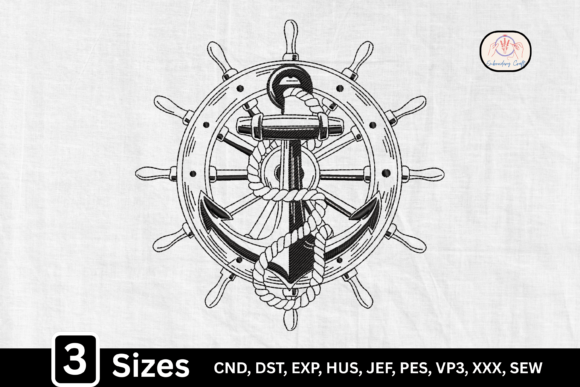
Nautical Ship Wheel Anchor
As an experienced embroidery designer who has spent countless weekends setting up booths at local craft fairs, I know that the difference between a design that sits on a shelf and one that sells out in minutes often comes down to visual impact and practical execution. When I first reviewed the Nautical Ship Wheel Anchor design, my immediate thought was not about its technical stitch count or file format, but rather how it would perform under the harsh fluorescent lights of a convention center or the bright sun of an outdoor market. This design features a bold anchor intertwined with a classic ship wheel, creating a maritime helm motif that screams coastal charm. It is exactly the kind of embroidery file that can elevate a simple tote bag into a premium handmade product.
The First Impression: Bold, Coastal, and Commercially Viable
When you look at the Nautical Ship Wheel Anchor, the aesthetic is undeniably strong. It does not feel like a delicate, faint watermark; it feels like a statement piece. For a craft fair seller, this is crucial. Customers walking past a booth are scanning for things that catch their eye from a distance. The interplay between the anchor and the wheel creates a balanced, symmetrical focal point that works beautifully as a central design element. It leans heavily into a rustic yet elegant vibe, perfect for those looking to add a touch of the ocean to their wardrobe or home decor. Whether you are targeting the beach lifestyle crowd or general nautical enthusiasts, this design bridges the gap between cute and sophisticated. It is versatile enough to be considered a Beach category staple while maintaining a timeless appeal that won't go out of style next season.
Product Performance: Where This Design Shines
Imagine your table display at a weekend market. You have rows of embroidered tote bags, aprons, tea towels, patches, caps, small pouches, pillow covers, and giftable handmade items. Where does the Nautical Ship Wheel Anchor fit best? In my experience, this design is a powerhouse on canvas tote bags and heavy-duty market bags. The bold lines of the anchor and wheel translate exceptionally well onto sturdy fabrics, providing a professional finish that customers associate with high-quality goods. It serves as an excellent tote bag design because the size allows the details to breathe without feeling cramped.
For kitchen-focused vendors, this design is a natural fit for tea towel embroidery. A crisp white or navy blue flour sack towel featuring this maritime helm design looks incredibly inviting and makes for a fantastic gift item. Similarly, on denim or cotton aprons, the design adds a touch of artisanal flair that appeals to cooking enthusiasts. The Nautical Ship Wheel Anchor also excels as an embroidered patch. If you plan to sew these onto vests, hats, or backpacks, the defined edges of the wheel make it easy to apply cleanly. However, when considering smaller items like fabric pouches or cap fronts, you must be strategic. While it can work, the design might lose some of its grandeur if scaled down too much, so it is best reserved for larger surface areas where it can truly stand out.
Production Practicality and Batch Selling
Running a successful small shop product line requires efficiency. One of the most important aspects of the Nautical Ship Wheel Anchor is its repeatability. For a busy crafter preparing inventory for a large event, having a design that registers clearly and consistently across different batches is essential. The clean lines suggest that this will hold up well during machine production, provided the stabilizer and thread choices are correct. It photographs beautifully for online listings, which is vital for Etsy sellers and digital creators. The contrast inherent in the design usually translates well in photos, making your printable mockup images pop and driving clicks from potential buyers.
However, before you commit to mass-producing this as a commercial embroidery item, you need to consider the technical nuances. The description mentions a "bold" anchor, which implies a higher stitch density. High-density designs require careful attention to detail. If you rush the process, you risk puckering the fabric or creating a stiff, uncomfortable texture. To ensure the finished product feels premium, you must use the right stabilizer and confirm the hoop size matches the garment dimensions. A design that looks great on a flat screen can sometimes behave differently on a curved cap surface or a textured towel. Always test the machine embroidery design on scrap fabric first to see how the threads lay against the weave of your material.
Critical Considerations for Success
There are specific areas where the Nautical Ship Wheel Anchor demands extra care. Dense stitch areas, such as the center of the wheel spokes or the body of the anchor, can become thick if not digitized correctly. If you are working with dark fabric, you may need to adjust your thread colors or add a backing layer to prevent show-through, which can ruin the crispness of the image. Tiny details, though likely minimal in this specific design, should always be scrutinized. If the design includes any small lettering or intricate curves, verify that they remain legible at the intended size. A design that looks clear on a computer screen might blur slightly when stitched on a thin t-shirt or a light-colored linen.
Fabric texture plays a massive role in the final look. On a smooth cotton, the design will appear sharp and modern. On a rougher burlap or a highly textured beach towel, the stitches might get lost in the weave, altering the visual appeal. This is why comparing fabric colors and testing on various materials is non-negotiable. You want to ensure that the stitch density complements the fabric rather than overwhelming it. Additionally, if you are selling these items commercially, you must confirm the commercial licensing terms of the digital embroidery file before listing them on Etsy or other marketplaces. Protecting your business means understanding the legalities of the assets you use.
Maximizing Visual Appeal and Customer Engagement
Ultimately, the goal of any craft fair product is to engage the buyer emotionally. The Nautical Ship Wheel Anchor taps into a sense of adventure and nostalgia. It evokes memories of summer vacations, seaside towns, and the freedom of the open water. This emotional connection is what drives sales. When a customer sees this design on a hand-stitched or machine-embroidered item, they are not just buying a decoration; they are buying a piece of that coastal lifestyle. By integrating this design into your brand's identity, you create consistency that builds trust. Whether it is on a kitchen towel or a pillow cover, the design reinforces your reputation as a maker of quality, thoughtful goods.
To truly succeed, you must treat the design as more than just a graphic; it is a core component of your product value. Use it to create cohesive collections. Pair the nautical theme with complementary colors like deep blues, sandy beiges, and crisp whites to enhance the maritime mood. Create at least one real mockup using the actual fabric and thread you intend to sell. This step ensures that the final product matches your marketing promises. By paying attention to the design assets and respecting the technical requirements of embroidery, you can turn the Nautical Ship Wheel Anchor into a bestseller that stands out in a crowded marketplace. Remember, the difference between a hobby project and a profitable business often lies in the details you check before you start stitching.